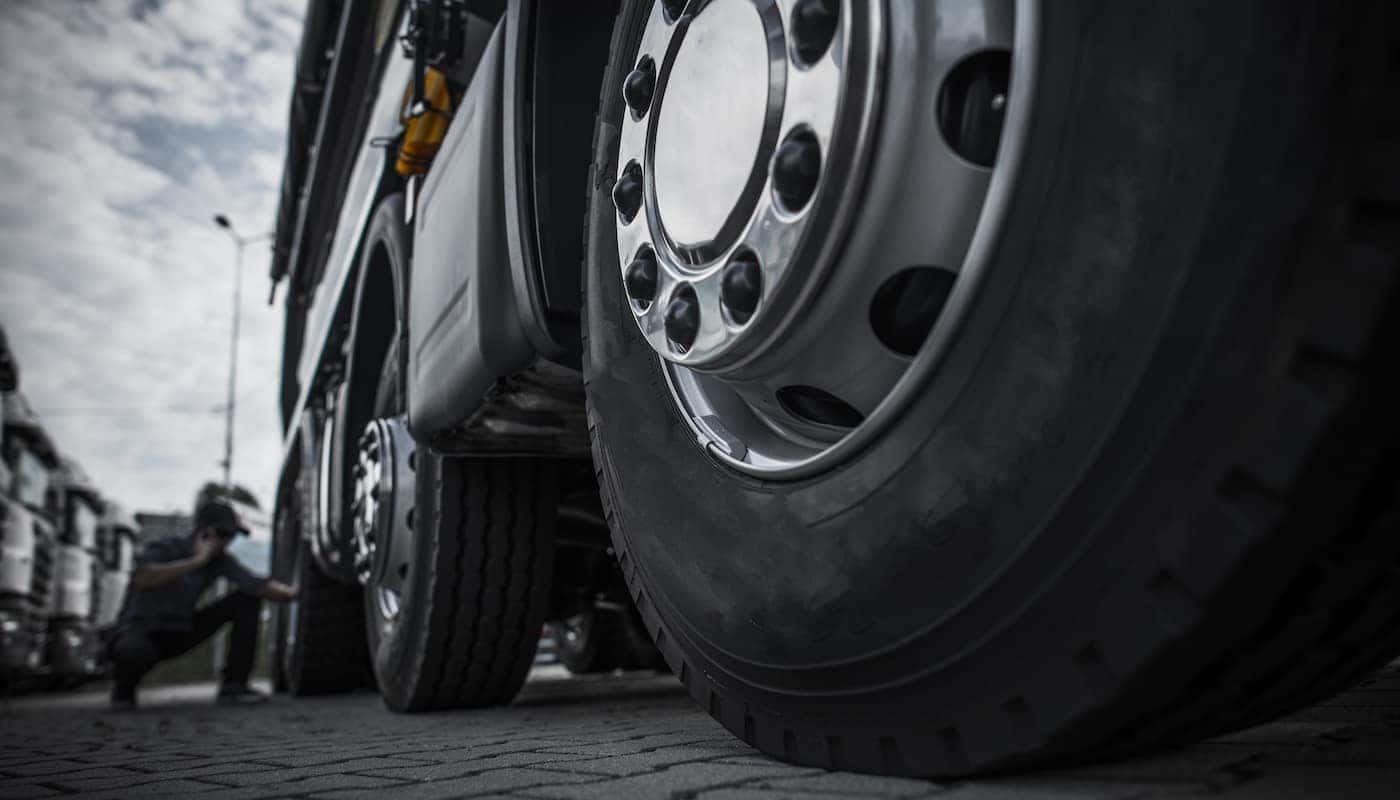
Surviving a Steer Tire Blowout in the Heat
The Rolling Rig
Keep a worry-free truck with these maintenance tips!
Summer hauling across major freight corridors presents demanding challenges for commercial drivers. When temperatures climb into the triple digits, the strain on heavy-duty equipment intensifies. Among the most critical situations an over-the-road driver can experience is a front-axle tire failure. When a steer tire gives way at highway speeds, split-second choices determine the outcome. Knowing how to execute a proper tire blowout recovery is a vital skill for protecting yourself, your vehicle, and other motorists. Whether you’re operating an over-the-road sleeper or an urban day cab during summer months, elevated temperatures and hot pavement can increase stress on commercial truck tires, making routine inspections even more important.
Browse Pre-Owned TrucksFind a Center Near You
From Atlanta to Chicago: How Regional Heat Stress Causes Tire Failure
As you’re moving cargo through blistering regions, high asphalt temperatures can aggravate minor issues in your rubber. Tire failures rarely occur without a root cause. Spotting these problems before they escalate is key, as it’s your best defense against an unexpected roadside emergency.
- Underinflation: Operating on underinflated tires is a frequent culprit behind sudden failures. Lower air pressure forces the tire sidewalls to flex excessively during rotation. This movement generates rapid internal friction. When it’s combined with a 100-degree afternoon, the compounding heat can degrade the internal structure, culminating in a dangerous blowout.
- Overloading: Exceeding maximum weight limits places immense stress on every tire component. Overloaded pre-owned trucks force the rubber to carry weight beyond its engineered design parameters. Under intense summer conditions, it’s this excess weight that drives up internal pressure and accelerates tire fatigue, increasing the potential for structural failure.
- Road Hazards: Potholes, sharp metallic debris, and rough highway shoulders are constant threats near major logistics hubs like Indianapolis or Dallas. Hitting sharp objects can create deep cuts or weaken internal belts. The relentless heat can cause these pre-existing weak points to give under pressure while you’re traveling at highway speeds.
- Tire Wear and Aging: Rubber compounds naturally break down over time due to weather exposure and continuous friction. Excessively worn tires are more vulnerable to damage, punctures, and heat-related failures. Running on aged or worn tires during peak summer months substantially elevates the risk of a roadside incident, and it’s an issue that shouldn’t be ignored.
Tire Blowout Recovery: What to Do in the 100-Degree Summer Heat
If a front tire fails, a loud pop is usually followed by a heavy drag pulling the steering wheel toward the side of the compromised tire. Maintaining control requires a calm, deliberate response.
- Hold the Wheel Firmly: The sudden, violent pull can easily jerk the controls out of your hands. Keep a tight, balanced grip at the 9 and 3 o’clock positions so you’re able to stabilize the vehicle’s trajectory against the immense drag.
- Avoid Slamming the Brakes: Stomping on the brakes shifts the truck’s weight forward onto the damaged wheel. It’s a sudden force that can cause the vehicle to pull violently to one side, destroy the rim, or enter an unrecoverable jackknife.
- Apply Light Acceleration: Focus first on maintaining steering control and avoiding sudden braking inputs. In some commercial driver training programs, drivers are taught to maintain or briefly apply throttle to help stabilize the vehicle before gradually slowing down.
- Coast Down Safely: Once the vehicle stabilizes, ease your foot off the throttle. Let the engine braking and the rolling resistance of the blown tire reduce your speed naturally without upsetting the chassis balance.
- Move to a Wide Shoulder: Once the vehicle is stabilized and traffic conditions permit, gradually reduce speed and carefully guide the truck to a safe location off the roadway. Signal clearly and steer your pre-owned truck to a spacious area well clear of active traffic lanes so there’s plenty of room to assess the situation.
Keeping Your Fleet Moving Safely Across Our Nationwide Center Locations
Preventing a heat-induced breakdown begins with selecting high-quality equipment and following a proactive maintenance strategy. When you purchase a truck from International Used Truck Center, you’re backed by the strength of the International service network, with more than 1,000 servicelocationsNorth America. Combined with International’s partnership with Love’s Truck Care and Speedco, you’ll have access to a vast network of service centers, trained technicians, and maintenance support focused on maximizing uptime and keeping your business on the road. Incorporating tire inspections into every pre-trip inspection can help drivers identify issues before they become costly roadside breakdowns.
We apply an industry-leading 114-point inspection process to help identify potential mechanical vulnerabilities before any vehicle joins our inventory. Furthermore, qualifying late-model trucks may be eligible for our comprehensive1-Year/100,000-Mile Factory-Backed Warranty featuring a $0 deductible and no limits of liability. To provide even more confidence on the road, our qualifying retail vehicles come with a complimentary 60-Day Proven Protection Plan covering major engine, aftertreatment, and drivetrain components.
When you purchase a pre-owned truck from one of our multi-location centers, you’ll gain access to a massive dealer support network of over 700 locations across North America. This nationwide footprint helps you stay operational, whether you’re managing a single vehicle or a large fleet through the height of the summer heat. Contact us today and start your journey!
The information provided in this article is for educational and informational purposes only and does not replace formal CDL instruction, professional safety training, or situational driver judgment. Because emergency dynamics vary based on load, weather, and road conditions, the operator assumes sole responsibility for safe vehicle operation; always defer to your vehicle’s official OEM Owner’s Manual for specific emergency procedures. Furthermore, all vehicle protection programs—including the 1-Year/100,000-Mile Factory-Backed Warranty and 60-Day Proven Protection Plan—apply strictly to qualifying late-model pre-owned inventory and are subject to specific terms, conditions, and exclusions. Visit a local International Used Truck Center location or speak with a representative for complete eligibility and warranty documentation.